

Do Spin Classes Build Muscle? The Real Answer

That heavy-leg feeling after a climb is real. But do spin classes build muscle in the same way as lifting weights? Not quite. Indoor cycling can make your legs stronger, more powerful, and more fatigue-resistant, especially if you are new to exercise or returning after time away. For noticeable muscle size, though, the answer depends on how you ride and what else is in your weekly routine.
The good news: a great ride is never wasted. Spinning can be a big part of feeling fitter, moving with confidence, and building a body that handles long days, stairs, dance floors, and weekend plans with more energy.
Do Spin Classes Build Muscle or Just Burn Calories?
Spin classes do build some muscle, mainly in the lower body. Your quads, glutes, hamstrings, calves, and hip muscles work every time you push the pedals. When resistance goes up, especially during seated and standing climbs, those muscles have to produce more force to keep the pedals moving.
That repeated work can create muscle-building stimulus, particularly for beginners. If your previous workout was mostly walking, occasional gym visits, or no structured exercise at all, regular rides may strengthen and shape your legs over the first few months. You may also notice better balance, stronger hips, and less effort when climbing stairs.
Still, cycling is primarily a cardiovascular workout. The pedal stroke involves lots of repetitions, and classes often mix sprints, endurance intervals, hills, and recovery tracks. That is excellent for heart health and muscular endurance, but it is different from the progressively heavier, lower-rep training usually used to maximize muscle growth.
Think of it this way: spin helps your muscles do more for longer. Traditional strength training is typically more efficient at making them substantially bigger.
Which Muscles Does a Spin Class Work?
Your lower body does the headline work. The quadriceps at the front of your thighs drive much of the downward pedal stroke. Your glutes contribute more when you add resistance, ride out of the saddle, and focus on pressing through the whole foot rather than only the toes. Hamstrings and calves help guide and support the pedal motion.
Your core is working too, even if there is not a single crunch in sight. It helps keep your torso stable as your legs create force underneath you, particularly during faster efforts and climbs. Good bike setup and posture matter here. A relaxed grip, long spine, and steady core let your legs take the work instead of dumping it into your shoulders and lower back.
Your upper body gets some support work from holding your riding position, but a spin bike is not a complete upper-body strength workout. If building your back, chest, shoulders, and arms is a goal, add dedicated resistance training rather than expecting handlebars to do the job.
Resistance changes the result
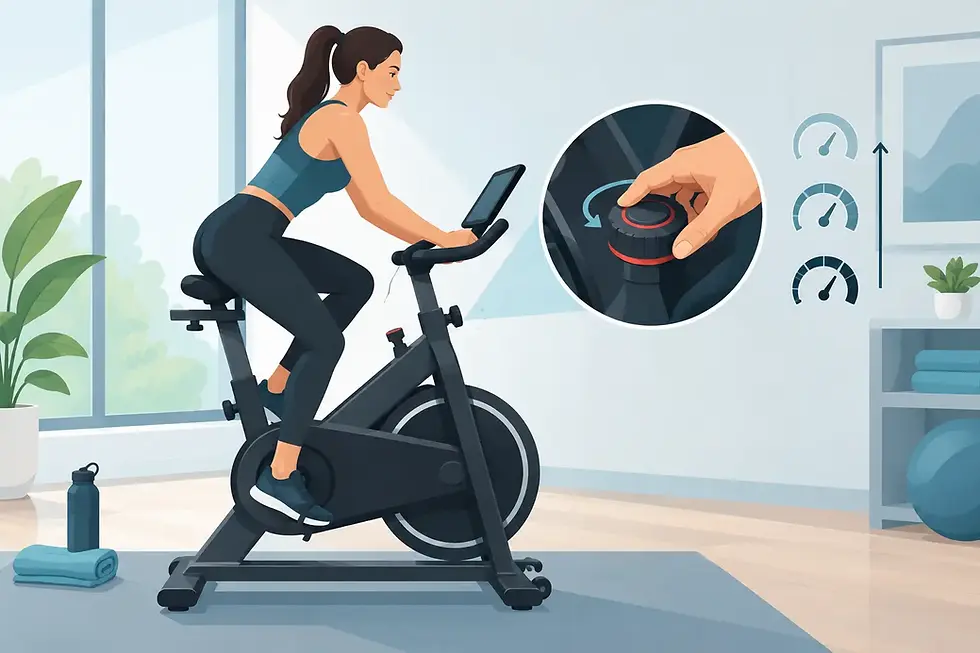
A fast spin at very light resistance can leave you breathless, but it is not the most effective approach for building leg strength. Adding enough resistance that you can feel the pedal stroke gives your muscles something meaningful to push against.
That does not mean cranking the dial until your knees complain. The right level is challenging while still allowing smooth, controlled pedaling. You should feel like you are working, not like you are wrestling the bike. No pressure to copy the rider beside you. Your resistance, your ride.
What Spin Can Realistically Change
With consistent classes, many riders see stronger-feeling legs, improved stamina, and more definition. That definition can come from a combination of small muscle gains and changes in body composition. If you are also eating in a way that supports your goals, regular cycling may help reduce body fat over time, making the muscle you already have more visible.
Results vary. Someone who is new to movement may gain strength quickly from two or three rides a week. Someone who already squats, deadlifts, and trains hard in the gym may find that spin is more useful for conditioning, recovery, and fun than for new muscle growth.
Your class style matters as well. A ride packed with climbs and resistance-based intervals will generally challenge your leg muscles differently than a class focused almost entirely on speed. Both can feel amazing. They simply serve different parts of your fitness.
How to Ride for Stronger Legs
If your goal is to get more muscle-building value from spin, focus on effort quality rather than trying to make every class an all-out battle. Choose resistance you can control, then use climbs and slower, heavier pushes to practice generating force through the pedals.
Aim for two to four rides a week, depending on your experience, recovery, and other workouts. More is not automatically better. Your body gets stronger during recovery, when it can repair and adapt to the work you have done. If your legs feel constantly flat, sore, or unusually tired, a rest day may do more for your progress than another hard session.
Progress can be simple. Over several weeks, you might hold a challenging hill for a little longer, use slightly more resistance with good form, or recover faster between efforts. Those are real wins. You do not need to chase the biggest number on the resistance dial to prove you had a good ride.
Food supports the work, too. Eating enough overall and including protein across your meals gives your muscles the raw materials to recover. Sleep is just as unglamorous and just as useful. A high-energy playlist helps, but it cannot replace rest.
Pair Spin With Strength Training for Best Results
For the most noticeable muscle gains, pair cycling with two full-body strength sessions each week. You do not need to become a gym person overnight or train for hours. A simple routine with squats or lunges, hip hinges, pushes, pulls, and core work covers the major movement patterns that cycling misses.
This combination has a nice payoff. Strength training can help you produce more power on the bike, while spin builds the conditioning that makes everyday life and longer workouts feel easier. It also creates more balance in your routine, so your knees, hips, and lower back are not asked to do the same job every day.
If you are brand-new, start with rides first and build the habit. Once class feels familiar, add one short strength workout. Consistency beats an ambitious plan that disappears after two weeks.
A Few Signs You Are Pushing Too Hard
Challenging yourself is part of the fun. Pain is not the goal. Sharp knee pain, persistent hip or back discomfort, numbness, dizziness, or symptoms that continue after class deserve attention. Check your bike setup, lower your resistance, and speak with a qualified fitness or health professional if something does not feel right.
Good instruction matters most for new riders. At a beginner-friendly studio such as Sync Cycle in Serangoon, it is completely okay to ask for help setting up your bike or choosing a pace. Getting the fit right can make your first ride feel far more comfortable and lets you focus on the music, movement, and mood.
The Bottom Line for Riders
Spin is a powerful way to strengthen your lower body, improve muscular endurance, and feel more athletic. It may build muscle, especially when you are starting out, but it is not a replacement for progressive strength training if bigger muscle gains are your main goal.
Let the bike be a place to smile, sweat, and sing your way into a stronger routine. Add resistance with intention, give yourself recovery, and celebrate the moments when the hill that once felt impossible becomes your favorite track.


Comments