

Beginner Spin Bike Setup Guide That Feels Easy

The fastest way to ruin your first ride is not the workout. It’s a bike that feels off from the first pedal stroke. If your knees feel cramped, your wrists take too much pressure, or the seat feels like it belongs to someone twice your size, this beginner spin bike setup guide will help you fix the basics before class even starts.
A good setup does not need to be perfect on day one. It just needs to feel stable, comfortable enough, and easy to ride for the length of class. That is the sweet spot for beginners. No pressure, no overthinking, just a few smart adjustments that help you smile, sweat, and actually enjoy the ride.
Beginner spin bike setup guide: start with the seat height
Seat height is the first thing to check because it affects almost everything else. When the seat is too low, your knees stay too bent and your legs do more grinding than pedaling. When it is too high, your hips may rock side to side and your hamstrings can feel overworked.
A simple starting point is to stand next to the bike and line the seat up roughly with your hip bone. That gets you close enough to test. Once you clip in or place your feet in the cages, pedal slowly and watch what happens at the bottom of the stroke. Your knee should still have a slight bend. Not locked out, not deeply bent.
If you feel like you are reaching for the pedal at the bottom, lower the seat a little. If your knees feel jammed at the top of each turn, raise it slightly. Small changes matter here. Even a tiny adjustment can make the bike feel very different.
It also helps to notice your hips. If they sway side to side when you pedal, the seat is often too high. That movement may not seem like a big deal at first, but over a full class it can create discomfort in your lower back or hips.
Set the seat forward or back
Once the height feels decent, look at the seat position front to back. This affects how your knees track over the pedals and how balanced you feel over the bike.
A common beginner mistake is leaving the seat too far back because it can feel safer at first. The problem is that it may force you to overreach through the legs and stretch too much through the upper body. Too far forward can feel cramped and heavy on the knees.
A practical way to check is to bring the pedals level, with one foot forward and one back. On many riders, the front knee should sit roughly over the middle of the front foot. You do not need to obsess over a perfect line. You are aiming for a position that feels centered and controlled.
If your quads are doing all the work and your knees feel pressured, the seat may need to go back slightly. If you feel like you are chasing the pedals, bring it a bit forward. Again, think small. Spin bikes respond well to subtle tweaks.
Handlebar height matters more than beginners think
If the seat supports your lower body, the handlebars support your confidence. New riders often do better with handlebars set a little higher than the seat, especially during the first few classes.
Higher handlebars reduce how far you need to hinge forward. That can take pressure off your back, neck, shoulders, and wrists. It also makes the bike feel less aggressive, which is exactly what many first-timers need. You can always lower them later as your comfort and mobility improve.
If the handlebars are too low, you may round your back, grip too tightly, and feel tension in your upper body before the real workout even starts. If they are extremely high, though, your posture can become too upright and disconnected from the ride. There is a middle ground where your chest feels open, your spine feels long, and your hands rest lightly instead of hanging on.
For riders with tight hips, a history of low back discomfort, or limited flexibility, a higher handlebar setup is usually the friendlier choice. That is not a shortcut. It is smart setup.
Check your reach before class starts
Reach is the distance from your seat to the handlebars. This one gets missed a lot, but it changes how natural the bike feels.
You should be able to place your hands on the bars with soft elbows and relaxed shoulders. If your arms are straight and locked, you are probably too far away. If your elbows are cramped and your body feels compressed, you may be too close.
A good setup lets you keep a slight bend in the elbows and a neutral wrist. You want support, not strain. Your upper body should feel stable enough to handle transitions, but not tense.
This is where beginners sometimes think discomfort is just part of spinning. It is not. Effort is part of spinning. Numb hands and aching shoulders usually point to setup, not toughness.
Foot position and straps can change the whole ride
Whether you use cycling shoes or regular sneakers in toe cages, your foot should be placed so the ball of your foot sits over the widest part of the pedal. Too far forward and your calves may burn out early. Too far back and the pedal stroke can feel awkward.
If you are using cages, tighten the straps enough so your feet feel secure but not trapped. You should not be fighting to get out at the end of class. With clip-in shoes, make sure they click in firmly and twist out smoothly before the ride begins.
Take ten seconds to practice getting in and out if you are new. That little confidence boost goes a long way. First rides feel better when you are not worrying about your feet at every stop.
Resistance is part of setup too
This part surprises people. Bike fit is not only about where the seat and handlebars go. The resistance you start with matters too.
If the resistance is too light, your legs can spin out and feel unstable, especially when you come out of the saddle. If it is too heavy, everything feels like a grind and your form can collapse fast. Beginners usually do best with enough resistance to feel connected to the pedal stroke, but not so much that they are pushing for dear life.
A good cue is this: your pedal stroke should feel smooth and controlled, not bouncy. You want to feel the flywheel working with you, not running away from you.
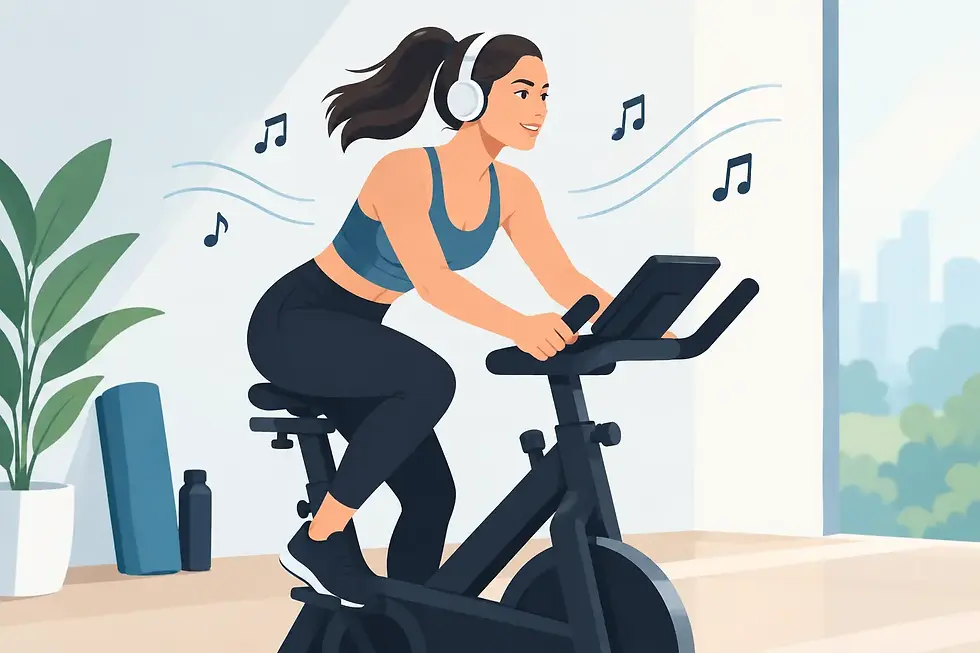
This is also where class style matters. Music-driven rides can shift between speed, climbs, and rhythm work, so your resistance will change throughout class. That is normal. What matters at the start is having a base setting that feels steady.
Your beginner spin bike setup guide for common discomforts
A few aches are common when you are new, but they do not all mean the same thing. Seat soreness is very normal in the first few rides. Your body usually adapts. Knee pain is different. That often signals a seat height or fore-aft issue, or resistance that is too heavy. Wrist pressure usually points to too much body weight dumping into the handlebars. That can come from handlebar height, reach, or simply gripping too hard.
If your neck tightens up, try lifting your chest and softening your shoulders. If your lower back complains, check whether your handlebars are too low or your seat is too far back. If your toes go numb, revisit your foot position and shoe tightness.
Some discomfort is part of learning. Sharp pain is not. If something feels wrong, adjust early instead of trying to push through a full class.
The best setup is the one you can repeat
One ride that feels good is great. A setup you can remember and recreate is even better. If your bike has number markers on the seat post, seat slider, and handlebars, take note of them after class. Snap a quick photo if that helps.
Your numbers may still change over time. As you get stronger, more mobile, or more comfortable on the bike, your preferences can shift. That is normal. A beginner setup is a starting point, not a lifetime assignment.
If you are taking your first studio class, ask the instructor to check your bike before the music starts. A good studio will make this feel easy, not awkward. At Sync Cycle, that first-bike moment is part of the welcome. Riders first means you do not have to figure it all out alone.
One last thing before you clip in
Do not chase the most advanced-looking setup in the room. Chase the one that lets you ride with control, breathe without tension, and leave class feeling proud instead of beat up. A beginner spin bike setup guide should make your first ride feel more doable, and maybe even fun. Once the bike fits you, the rest gets a lot easier.

Comments