

Spin Classes: Your First Ride, Minus the Pressure

The lights dim. The beat drops. Everyone starts moving together. Spin classes can look intense from the doorway, but your first ride does not need to feel like a test you have to pass. It is simply 45 or 50 minutes set aside for you: music, movement, a little sweat, and the very good feeling of doing something for yourself.
At Sync Cycle, we believe the best ride is not the one where you match the person beside you. It is the one that leaves you smiling when you walk out. Smile, sweat, sing - in whichever order feels right.
What spin classes are really like
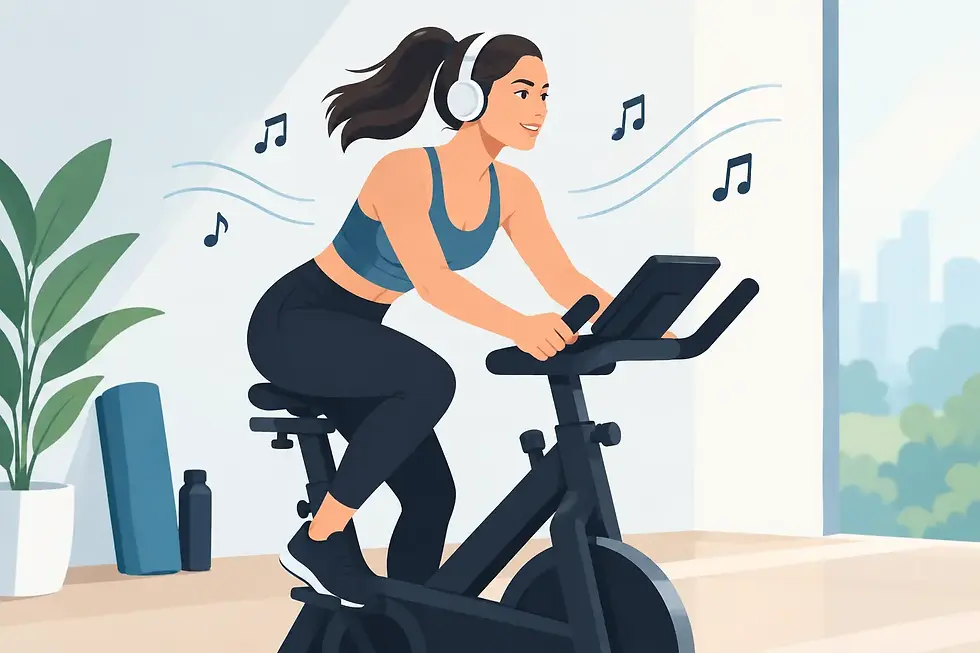
Indoor cycling is a music-led workout on a stationary bike. An instructor guides the room through changes in pace, resistance, and position, usually in time with a playlist that gives the class its energy. You may ride seated for one song, stand for a climb in the next, then settle into a steady push as the chorus hits.
That sounds structured because it is. The structure is helpful. You do not have to plan a workout, count your intervals, or decide what to do next. You just listen, move, and make the ride your own.
The part newcomers sometimes miss is that a group class is not a competition. The instructor may invite the room to turn up the resistance or hold a faster rhythm, but your bike is yours. You choose the load. You choose when to sit back down. You can take a breath, sip water, and rejoin when you are ready. No pressure is more than a nice phrase - it is how a good studio class should feel.
Before your first spin class
A little preparation makes a first ride much more comfortable. Arrive early enough to meet the instructor or studio team, especially if you have never adjusted a spin bike before. They can help you set it up properly and explain how the pedals work. That is not a beginner question. It is exactly what they are there for.
Wear clothes you can move and sweat in. Fitted shorts or leggings tend to feel better than loose fabric because they will not catch on the saddle or pedals. A supportive top, water bottle, and small towel are usually all you need. Specialty cycling shoes can make clipped-in riding feel secure, but many studios also offer options for regular athletic shoes. Check the studio details before you go so there are no surprises at the door.
You do not need to arrive already fit. You do not need to know the choreography, understand cycling terms, or have a certain body type. The only useful goal for a first class is to leave knowing you can do it.
A simple bike setup that makes a big difference
An uncomfortable bike setup can distract from an otherwise great ride, so ask for help rather than guessing. In general, the saddle should be around hip height when you stand beside the bike. When you pedal with one foot at the bottom of the stroke, your knee should have a soft bend rather than lock straight.
Handlebars can be set higher if you are new, tight through the back or hips, or simply want a more upright position. There is no prize for having them low. Keep your shoulders relaxed, hands light on the bars, and core gently engaged. If something pinches, strains, or feels wrong, flag an instructor. Small adjustments can change everything.
How hard should your ride be?
Here is the honest answer: it depends. Spin classes can be a challenging cardiovascular workout, but effort is adjustable in a way that outdoor group rides often are not. Resistance is controlled by you, so the same class can meet a first-timer at one level and give a regular rider a serious push at another.
Think of resistance as the road beneath your wheels. Too little, and your legs may spin faster than you can control. Too much, and every pedal stroke becomes a grind. Your sweet spot is a load that lets you move with purpose while maintaining stable form.
If the instructor asks for an effort of eight out of 10, your eight may look different from someone else’s. That is normal. Stay focused on your breathing, posture, and how your legs feel. It is better to ride a little lighter with control than force a level that makes you lose rhythm or tense up.
A good rule for your first few classes is to save something for the end. You want to feel worked, not wiped out. The confidence to come back next week matters more than one heroic ride.
The moves that matter most
You will likely hear cues such as “find the beat,” “add resistance,” “climb,” or “come out of the saddle.” You do not have to nail every one on day one. Start with the basics: pedal smoothly, keep your hips steady, and let your legs do the work.
When riding seated, stay tall rather than collapsing into the handlebars. When standing, shift your hips back over the saddle and keep a little bend in your elbows. Avoid leaning your full weight into the front of the bike. The handlebars are there for balance, not for carrying you through the song.
If an out-of-saddle section feels awkward, stay seated. If a faster track feels too fast, slow your legs and keep your resistance manageable. Skipping a move is not quitting. It is listening to your body, which is a skill worth building in every workout.
Why music changes the workout
The playlist is not background noise. In great spin classes, it is the shared pulse of the room. A song can make a climb feel more possible, turn a hard minute into a moment you sing through, and give a room full of strangers a reason to move together.
That shared energy is also why indoor cycling works for people who find solo gym workouts boring. You still get personal space and control over your effort, but you are surrounded by momentum. On a long workday, that can be the difference between talking yourself out of exercise and showing up anyway.
Music will not make every interval easy. It does make the experience feel less like a chore. And when fitness feels enjoyable, consistency gets a lot less complicated.
Making spin classes part of your week
For most beginners, two rides a week is a friendly place to start. It gives your body time to get used to the saddle, the movement pattern, and the cardiovascular effort. If you already train regularly, you may want more, but recovery still matters. Mix rides with walking, strength training, mobility work, or full rest days depending on your goals and schedule.
Soreness in your legs or seat after the first few rides is common. Sharp pain, ongoing knee discomfort, dizziness, or anything that feels concerning is not something to push through. Lower the resistance, take a break, and speak with a qualified health professional when needed. The strongest routine is one you can keep without beating yourself up.
It also helps to book classes around real life rather than an idealized version of it. Maybe that is an early-morning reset before work. Maybe it is an after-hours ride that helps you shake off a packed day. Maybe it is a weekend session with friends followed by coffee. The best time to ride is the time you will actually enjoy showing up.
Come for the ride, stay for the feeling
There is a particular moment near the end of a class when the room is hot, the music is loud, and you realize you have done more than you expected. Not because anyone demanded perfection, but because the energy made it easier to keep going.
That is the joy of spin classes. You can arrive unsure, take the options that serve you, and leave a little lighter than when you walked in. Clip in, turn the dial at your pace, and let your first ride be just that: a first ride worth coming back for.


Comments