
Can Beginners Use Cycling Shoes? Yes, Here’s Why

That first clip-in can feel like a bigger commitment than booking the ride itself. The good news? Can beginners use cycling shoes? Absolutely. You do not need to earn your shoes after a certain number of classes, hit a speed target, or know every move on the bike. Cycling shoes are simply an option that can make an indoor ride feel more stable, connected, and comfortable.
For some first-timers, sneakers are the easiest way to walk in and try a class with zero fuss. For others, cycling shoes help them feel more secure from song one. There is no medal for choosing one over the other. The best setup is the one that lets you focus on the music, your movement, and having a good time.
Why cycling shoes can help beginners
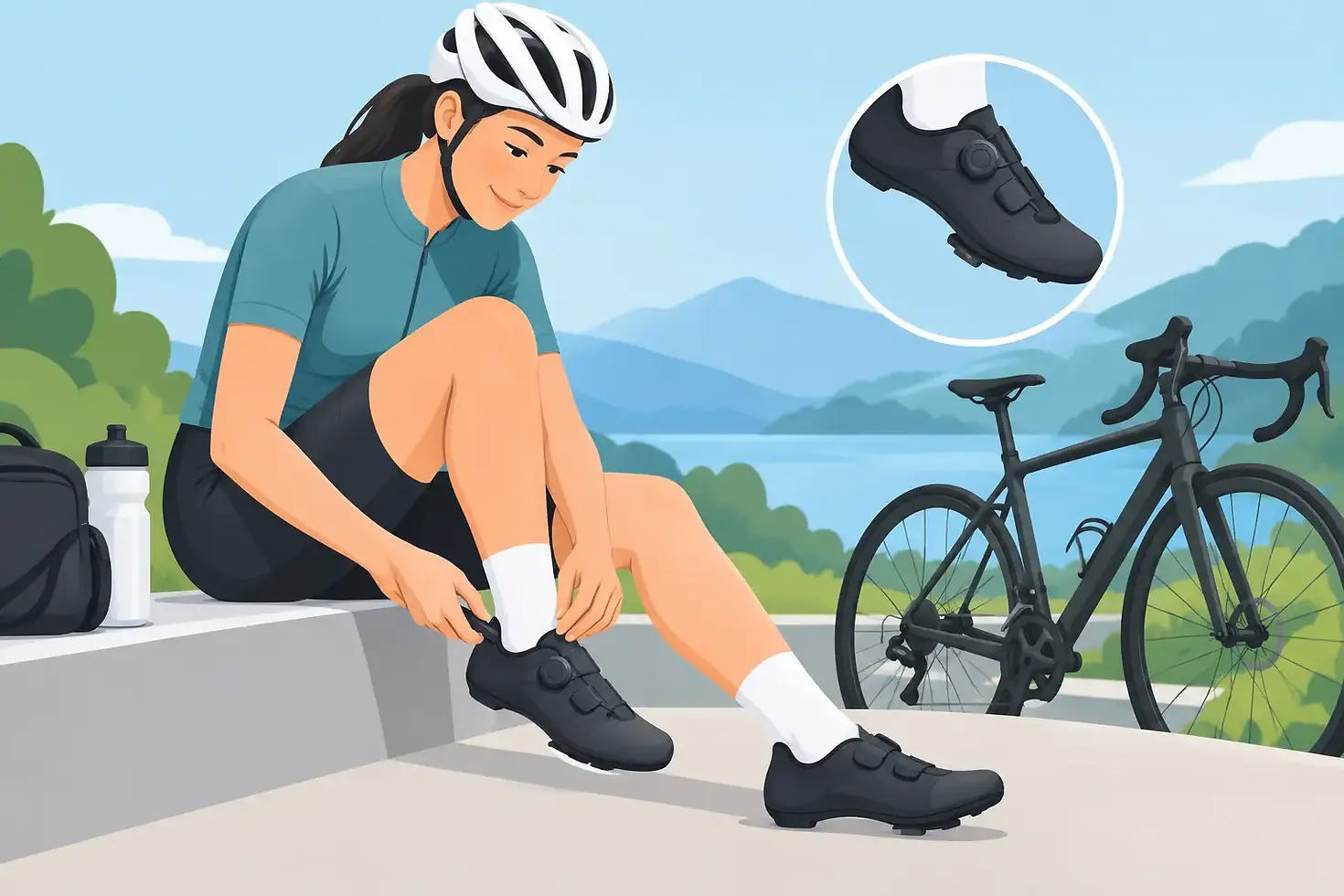
Indoor cycling shoes clip directly into compatible pedals. Instead of resting your foot on top of the pedal, your shoe is attached to it. That connection can make the ride feel more controlled, especially when you are pedaling quickly or riding out of the saddle.
The biggest benefit is stability. With a clipped-in shoe, your foot is less likely to shift around as the beat picks up. You can keep your attention on your posture and the instructor’s cues rather than wondering whether your sneaker is sitting in the right place.
Cycling shoes also have stiffer soles than most running shoes. Running shoes are made to cushion impact as you move through the day or hit the pavement. On a bike, that soft, bendy sole can make pressure build under the ball of your foot. A firmer cycling shoe spreads that pressure more evenly across the pedal, which can feel better over a full class.
There is a performance benefit too, but beginners do not need to chase it. Being clipped in means you can guide the pedal through the whole rotation rather than only pressing down. Still, smooth pedaling comes with practice. Think of cycling shoes as a helpful connection, not a shortcut to becoming an expert rider.
Do beginners need cycling shoes for indoor cycling?
No. Beginners do not need cycling shoes to enjoy a great indoor cycling class. If your studio has cages or straps on its pedals, a supportive pair of sneakers can be enough for your first few rides.
Starting in sneakers makes sense if you are unsure whether indoor cycling is for you, you are trying a class on a casual plan, or you simply want one less new thing to think about. Wear athletic shoes with a reasonably firm sole, lace them securely, and avoid very thick, squishy running shoes if possible. They can feel less stable in the pedal cage.
Cycling shoes may be worth trying early if you already know you enjoy bike-based workouts, plan to ride regularly, or want a more locked-in feeling. Many riders find that the initial learning curve is short. After a few clips in and out, it starts to feel natural.
At a beginner-friendly studio, no one should make you feel behind for wearing sneakers or uncertain about clipping in. At Sync Cycle, the goal is simple: smile, sweat, sing. Your footwear should support that, not turn the ride into a test.
What clipping in actually feels like
Before class starts, a team member can show you how the pedal and cleat meet. Usually, you place the front of the cleat into the pedal first, then press down through your heel until you hear or feel a click. That click means you are connected.
To unclip, you twist your heel outward, away from the bike. You do not pull straight up. The first few attempts can feel awkward because the motion is different from stepping out of a regular shoe, but it is a small movement once you get it.
Ask to practice while the bike is still and the lights are up. Clip in, unclip, then do it once more. Knowing you can get out easily takes away most of the nerves.
One tip makes a real difference: unclip one foot before the end of class, while you are still seated and steady. When it is time to get off, you will have one foot free and ready for the floor. There is no need to rush. No pressure.
Choosing beginner cycling shoes that feel good
Fit matters more than fancy features. A cycling shoe should feel secure around your heel and midfoot without squeezing your toes. Your toes need a little room to wiggle, but your heel should not lift as you pedal. If the shoe is painfully tight before class, it will not become more comfortable after 45 minutes of movement.
Look for a closure you can adjust easily. Velcro straps, dials, and simple ratchets all work. The best one is the one you can tighten enough to feel supported without cutting off comfort. Your feet may warm up and swell slightly during a ride, so avoid overtightening at the start.
It is also worth checking pedal and cleat compatibility before buying anything. Indoor cycling studios may use different pedal systems, and shoes often need a specific cleat attached to the bottom. If you are renting or borrowing shoes, that compatibility is usually handled for you. If you are purchasing your own pair, ask the studio what works with its bikes.
Do not stress about having the most expensive shoe. A comfortable, well-fitting entry-level pair is more useful than a high-performance shoe that feels stiff, pinchy, or confusing to use.
Common beginner worries, answered
“What if I cannot unclip?”
You can. It may take one or two tries at first, which is exactly why practicing before class helps. Tell the instructor or front desk team that it is your first time using clip-in shoes. They can check your setup and remind you of the heel-out motion. Most pedal tension can also be adjusted if it feels unusually hard to release.
“Will I fall over?”
The fear is understandable, particularly if you have watched outdoor cyclists have a wobbly stop. In an indoor studio, the bike stays in place. You are not balancing at a traffic light or trying to stop on uneven pavement. Keep your movements calm, stay seated while you unclip, and use the handlebars for support as you step down.
“Are cycling shoes uncomfortable?”
They should not be. They will feel different from sneakers because the sole is firmer and the fit is more secure, but different is not the same as painful. Numb toes, hot spots, or sharp pressure are signs to loosen the closure, check your cleat position, or try a different size or model.
“Will cycling shoes make the class too advanced?”
Not at all. Shoes do not decide your ride level. You can take every movement at your own pace, stay seated when needed, lower your resistance, and skip anything that does not feel right. The bike is there to meet you where you are.
A simple first-ride plan
Arrive a little early, especially if you are using cycling shoes for the first time. Ask for help setting your seat height, handlebar position, and shoe fit. A good bike setup can matter even more than the shoes themselves. If your knees feel cramped, your hips rock side to side, or you are reaching too far for the handlebars, speak up before the ride begins.
During class, do not worry about perfectly pulling up on every pedal stroke. Start by keeping your feet relaxed, your knees tracking forward, and your core gently engaged. Let the connection between shoe and pedal feel familiar. The rest can come later.
If clipping in feels like one new skill too many, wear sneakers this time and try cycling shoes at your next ride. Fitness is not a pass-or-fail experience. It is a series of small moments where you learn what helps you feel stronger, freer, and more at home on the bike.
Your first ride is allowed to be a little uncertain, a little sweaty, and a lot of fun. Choose the shoes that help you show up, then let the music do the rest.


Comments